
3rd European GREEN Conference – EGC 2025
10-13 June 2025 | Vodice, CROATIA
KeyNote Speaker
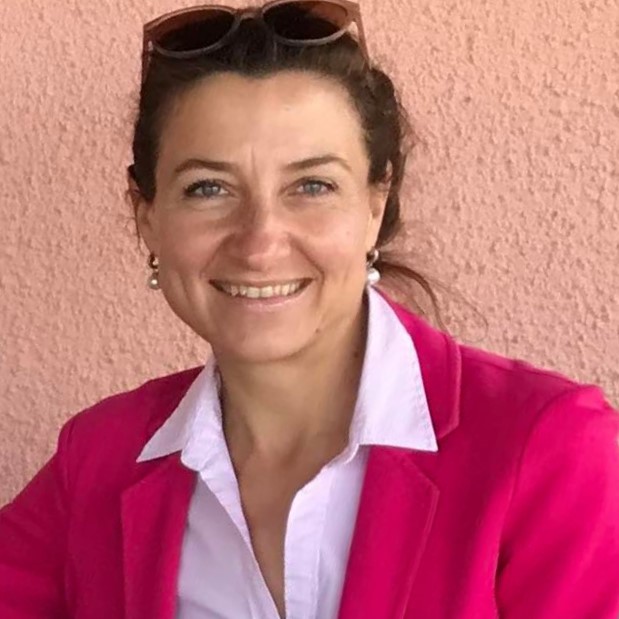
Prof. Dr. DAJANA GAŠO-SOKAČ
University of Osijek, Faculty of Food Technology (Croatia)
website: https://www.ptfos.unios.hr/index.php/nastavno-osoblje/izv-prof-dr-sc-dajana-gaso-sokac
Green trends in organic synthesis: Biocatalysis using by-products of the food industry
Dajana GAŠO-SOKAČ
Abstract
Green chemistry, also known as sustainable chemistry, is an approach to the design of chemical products and processes that aims to reduce or eliminate the use and generation of hazardous substances. It was developed in response to the harmful effects of traditional chemical industry practices on the environment, with an emphasis on pollution prevention through process optimization at the design stage. In the 1990s, the U.S. Environmental Protection Agency (EPA) defined twelve principles of green chemistry. These include waste prevention, atom economy, toxicity reduction, the use of renewable raw materials, energy efficiency, and the design of safer chemicals. A key principle is the use of catalysts, which enable more selective reactions and reduce waste. In accordance with the principles of green chemistry, modern organic synthesis focuses on the development of environmentally friendly processes that offer numerous advantages over classical methods. These “green” processes include the use of non-toxic solvents, reagents, and catalysts; performing reactions at room temperature; reducing waste generation; increasing atom economy; and applying alternative reaction conditions. Particular attention is given to the development of selective and reusable catalysts. In this context, biocatalysis based on by-products from the food industry represents a highly promising direction. Organic waste materials such as orange peel, papaya, pomegranate and banana peels, onion and peanut shells, corn leaves, sugarcane juice, and by-products of oil industry have shown significant catalytic potential. These raw materials can replace conventional, often toxic and expensive, catalysts in reactions such as the reduction of aldehydes and ketones, hydrolysis and esterification of esters, as well as condensation and multicomponent reactions. The conversion of biological waste into functional catalysts not only contributes to sustainable chemistry but also opens new possibilities for the synthesis of important intermediates, active pharmaceutical compounds, and commercially valuable substances. Green chemistry represents an interdisciplinary approach, integrating chemistry, engineering, and ecology with the goal of achieving safer, more energy-efficient, and environmentally sustainable processes—fully aligned with the principles of sustainable development.
Short biography
Dajana Gašo-Sokač was born on April 27, 1974, in Remscheid, Germany. She graduated from high school in Osijek in 1992 and earned her degree in 1998 from the Faculty of Food Technology in Osijek. She obtained her Master’s degree from the Faculty of Science in Zagreb in 2003, and her PhD in 2009 from the Faculty of Chemical Engineering and Technology in Zagreb. She has been employed at the Faculty of Food Technology in Osijek since 1999. She was appointed to the academic title of full professor in 2023. At the Faculty of Food Technology in Osijek, she teaches the courses Organic Chemistry, Organic Chemistry Laboratory, Isolation Techniques and Purification, Green Chemistry, and Antioxidants in Food. At the Department of Chemistry, she teaches Methods of Organic Synthesis and Green Chemistry, and at the Department of Biology, she teaches Organic Chemistry 2 and Organic Chemistry Laboratory 2. Within the postgraduate university study program in Food Engineering, she teaches the course Natural Organic Compounds, and in the Interdisciplinary Postgraduate University Program in Molecular Biosciences, she teaches Biomolecules in Food. She has published 43 scientific papers indexed in WoS and Scopus databases, as well as several papers in other journals and proceedings from international conferences. She has published five book chapters. She has led two institutional and one university-funded project, and participated as a researcher in four scientific research projects funded by the Croatian Science Foundation and the Ministry of Science, Education and Sports of the Republic of Croatia. She has also actively participated in national and international scientific conferences. She has served as a mentor or co-mentor for 16 graduate theses and 23 undergraduate theses. She is a member of the Croatian Society of Chemical Engineers and Technologists and the Croatian Chemical Society.
Email: dajana.gaso@ptfos.hr
.

 IAESP
IAESP 