
3rd European GREEN Conference – EGC 2025
10-13 June 2025 | Vodice, CROATIA
Plenary Speaker
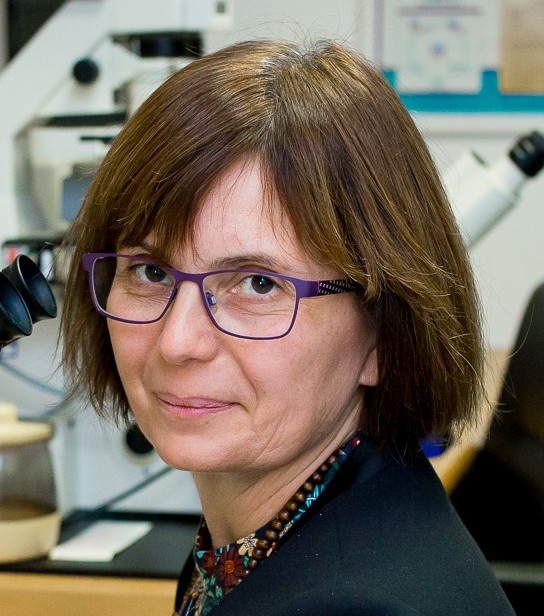
Prof. Dr. MARIJA HEFFER
University of Osijek, Faculty of Medicine, Department of Medical Biology and Genetics (Croatia)
Green Diet: Bridging Ecology and Metabolic Wellness
Marija HEFFER, Stipe VIDOVIĆ
Abstract
The earliest medical recommendations for healthy eating emerged in the shadow of World War II, aiming to ensure survival during times of scarcity. These guidelines primarily drove the industrial production of grains, sugar, and meat. Later recommendations, such as the food pyramid and “My Plate,” shifted focus from scarcity to promoting cardiovascular and metabolic health. Given the widespread prevalence of metabolic disorders, prediabetes, and diabetes, the popular pyramid from the early 20th century and its inspired offerings of ultra-processed foods (often fat-free products) have contributed to rising obesity rates. “My Plate” has failed to gain widespread adoption, partly due to the food industry’s resistance to rapid change. Advances in sequencing technology and understanding of human microbiome diversity now advocate for personalized diets tailored to individual metabolic profiles. However, the food industry is unprepared for this shift, as it would require replacing ultra-processed foods with “real food”—products directly sourced from fields to consumers. The medical practice, historically focused more on treatment than prevention, is similarly unready for this transformation. Recently, the anthropocentric view of health has been challenged by the less well-known “One Health” concept, which promotes the health of humans alongside sustainable food production that does not harm the environment. This approach emphasizes product traceability and banning items contributing to soil degradation and deforestation. Due to significant changes in health perceptions over the past 30 years and the need to protect ecosystems, it is challenging for the average consumer to identify truly healthy products. Our study assumed that young people are aware of the connection between health and nutrition and try to select foods that meet the minimum macro-nutrient requirements set by the World Health Organization (WHO). The survey was conducted in February 2024 among first- and second-year medical students. Macronutrient intake was assessed using the European Prospective Investigation into Cancer (EPIC)-Norfolk Food Frequency Questionnaire (FFQ). The study received ethical approval from the Medical Faculty of Osijek Ethics Committee (No: 2158-61-46-23-187). A total of 85 students participated (24 men and 61 women). The median age was 20 years (IQR: 19–21). According to the EPIC-Norfolk FFQ and WHO recommendations, 20% of participants had insufficient protein intake, while 81.2% consumed less than the recommended total fat intake. Regarding fiber intake, 12.3% consumed less than the recommended 25 grams per day. Additionally, 80% exceeded recommended carbohydrate intake, and 97.6% had an excessive intake of saturated fats. Based on our findings, young people poorly select healthy foods, which can be attributed to confusing information, financial constraints, separate living arrangements, academic stress, and the simplicity of food procurement. It is especially concerning given that these participants are future doctors who will soon provide dietary advice to patients. Even more alarming is the lack of nutrition-focused subjects in their curriculum. Addressing these curricular gaps still leaves the broader issue of public recognition of healthy foods and the necessity for clear labeling to indicate health benefits for humans and the environment. A significant scientific challenge will be establishing the link between soil health—where fruits and vegetables are grown—and the human microbiome, as well as shifting modern agriculture toward sustainability.
Short biography
Marija Heffer got her MD degree from the Faculty of Medicine, University of Zagreb in 1989, and a Ph.D. degree from the Faculty of Natural Sciences and Mathematics, University of Zagreb in 1996. From 1997 till 1998 she was a postdoctoral student at John Hopkins Medical School, Baltimore (USA). Currently, she is a Professor of Medical Biology, Genetics, and Neuroscience at the Faculty of Medicine Osijek. She is a full member of the Croatian Academy of Medical Sciences, a term member in European Dana Alliance for the Brain (EDAB) and winner of the Annual State Award for Science by Croatian Parliament (2015). She organized 24 manifestations of the Brain Awareness Week and participated in the organization of 4 TEDexOsijek events. The focus of her research has been the role of glycosphingolipids in development, aging, and neurodegeneration. Recently, her group has been working on gender-specific development of metabolic syndrome and neurodegeneration provoked by diet.
Email: mheffer@mefos.hr
.
.


 IAESP
IAESP 