
2nd European GREEN Conference – EGC 2024
11-14 June 2024 | Vodice, CROATIA
Plenary Speaker
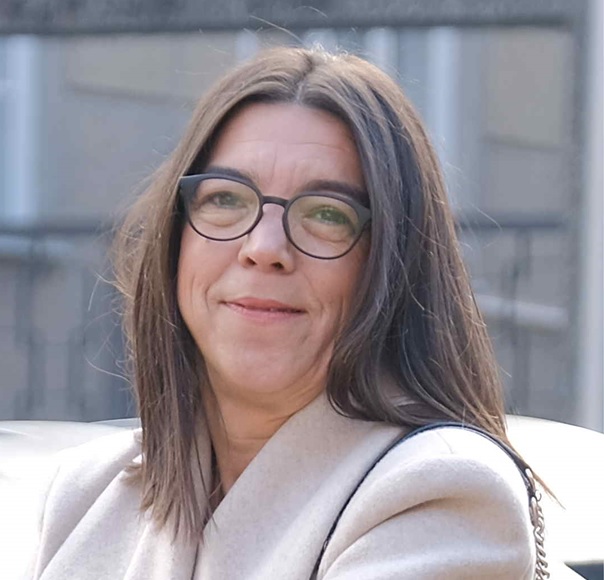
Prof. Dr. ALEKSANDRA ANIĆ VUČINIĆ
Faculty of Geotechnical Engineering, University of Zagreb, Croatia
Aleksandra Anić Vučinić graduated at the Faculty of Food Technology and Biotechnology, University of Zagreb in 1995, majoring in biochemical engineering, and was awarded the Rector’s Award for the best student work. She obtained the title of Doctor of Science in 2008 in the field of wastewater treatment technologies. Since 2001 she has been employed at the Faculty of Geotechnics, University of Zagreb where she currently holds the position of the Head of the Laboratory of Environmental Engineering and holds several courses in undergraduate, graduate, and doctoral studies in Environmental Engineering. She is and Editor-in-chief of scientific Journal of Environmental Engineering. She devoted her primary scientific research focus on waste management and the circular economy. She is the author and co-author of more than 100 scientific and professional papers. She has led and/or participated in a number of professional and scientific projects in the field of environmental protection and waste management. She participates in the establishment and implementation of spatial waste management systems at the state level. She is the president of the Croatian Association for Waste Management (HUGO), which is a member of the International Waste Management Association.
Plenary lecture:
Where is the circular economy going?
Aleksandra Anić Vučinić
The consumer society we live in is becoming a serious threat to future generations due to excessive consomption of resoruces. Therefore, in the past ten years, the circular economy has become imperative in the waste management sector, and the primary guiding thought has been the preservation of existing resources and the exploitation of valuable resources from waste through recycling. A number of strategies, plans and directives were adopted as a direction in achieving the goals of the circular economy at the level of teh European Union. System shifts towards a circular economy are visible, however, the implementation of measures to achieve a number of different goals continuously encounters environmental, economic (cosical) and technological challenges. On the one hand, there are demands for a high rate of recycling of certain materials, which very often includes serious industrial plants, however, as the public’s awerness of environmental protection and climate change grows more and more, the construction of new plants is almost impossible. The thesis that the implementation of the circular economy will create savings turned out to be unfounded. Implementing a circular economy represents a significant cost that must be paid in order to conserve resources. The pursuit of the concept of “zero waste” is still technologically unfeasible. The practice has shown that global economic events significantly affect the possibility of achieving goals in the implementation of the circular economy postuplate. Thus, the war in Ukraine, the energy crisis, as well as the COVID pandemic showed all the vunerability of the waste management system and the circular economy implementation at the EU level.


 IAESP
IAESP 